A freestanding vanity can instantly add storage, countertop space, and a cleaner look to a bathroom remodel or refresh. It also makes the room feel more “finished” because it reads like furniture rather than a patchwork of open plumbing and crowded counters. The key is choosing a size and layout that works with your plumbing, daily routine, and available floor space—especially when you’re considering a three-drawer configuration designed to keep essentials organized and easy to reach.
What a freestanding vanity changes in a bathroom
Freestanding vanities do more than replace a sink—they reshape how the bathroom functions day to day. Instead of treating the sink as a standalone fixture, you create a defined grooming zone with dedicated countertop and storage.
- Creates a defined grooming zone with dedicated countertop and sink space
- Adds hidden storage that reduces countertop clutter and simplifies cleaning
- Offers flexibility for updates because it installs like furniture (not built into the wall the same way as many wall-hung units)
- Works well for a variety of styles—from modern to transitional—depending on finish and hardware
For homeowners who like to refresh decor over time, a freestanding piece can be easier to swap without rebuilding the entire wall area. Many models also allow small adjustments (like shimming) to deal with real-world floors that aren’t perfectly level.
Why a 3-drawer storage cabinet is practical
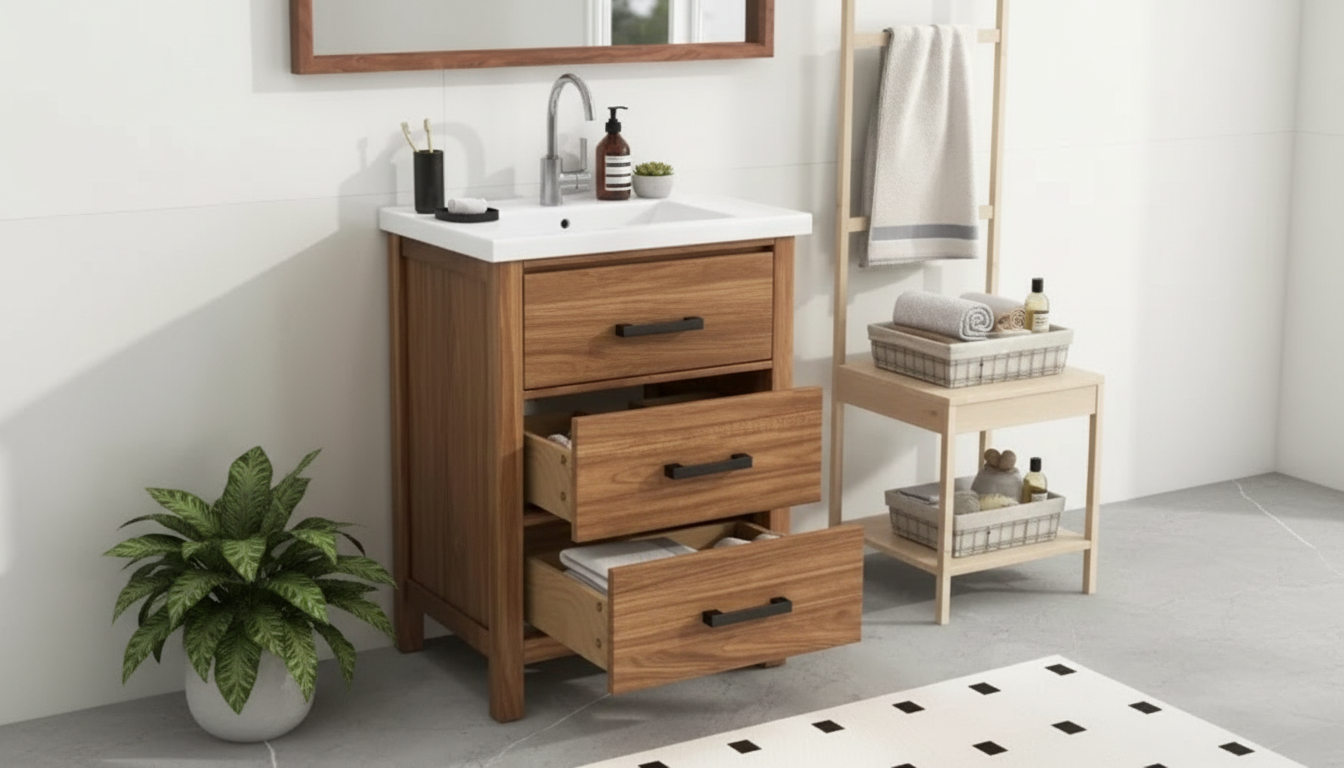
Bathrooms collect lots of small items: skincare, dental care, shaving supplies, hair tools, medications, and backups. A three-drawer layout adds structure so you don’t rely on a single under-sink cavity where plumbing blocks usable space.
- Separates daily-use items (top drawer) from backups and bulk supplies (lower drawers)
- Helps prevent overcrowding under the sink where plumbing reduces usable space
- Supports a consistent routine by assigning categories: dental care, hair tools, skincare, shaving, or first-aid
- Makes small bathrooms feel larger by keeping frequently used items out of sight
If multiple people share the bathroom, drawers also reduce “counter creep”—those piles of products that slowly spread across every available surface.
Sizing and placement: measurements to confirm before ordering
Accurate measurements are what turn a good-looking vanity into a smooth daily experience. Before ordering, check width, depth, height, and clearances around doors and fixtures.
- Width: ensure clearance for doors, drawers, and nearby fixtures (toilet, shower door swing)
- Depth: confirm the front edge won’t pinch walkway space; allow comfortable standing room at the sink
- Height: consider the comfort of primary users and whether a taller vanity improves ergonomics
- Wall and floor conditions: verify the floor is level and the wall can accept a secure backsplash or anchoring hardware if required
- Plumbing location: identify where the drain and supply lines exit the wall/floor to avoid conflicts with drawer boxes
Quick planning checklist before installation
| Item to confirm |
What to look for |
Why it matters |
| Door and drawer swing |
Open drawers fully without hitting toilet, tub, or door trim |
Prevents daily frustration and damage |
| Plumbing rough-in |
Drain and shutoff valves align with vanity openings |
Avoids costly rework or forced modifications |
| Floor level |
No rocking; shims available if needed |
Keeps doors aligned and prevents countertop stress |
| GFCI outlet placement |
Accessible but away from splash zones |
Supports safe use of hair tools and chargers |
| Ventilation |
Fan or airflow to reduce humidity |
Protects finishes and extends hardware life |
Sink, countertop, and faucet compatibility
Vanity “fit” isn’t only about cabinet dimensions—your sink and faucet setup affects cleaning, comfort, and long-term maintenance.
- Sink type: confirm whether the sink is integrated or drop-in and how it affects cleaning and seam maintenance
- Faucet holes: check whether the top supports single-hole, widespread, or centerset faucets
- Backsplash needs: decide whether a backsplash is required based on wall material and splash risk
- Drain assembly: match the drain type to the sink and faucet (pop-up vs. grid drain) and ensure correct finish coordination
- Water efficiency: pairing with a WaterSense-labeled faucet can reduce water use without sacrificing performance
For water-saving guidance, the EPA WaterSense program is a helpful reference when selecting faucets that balance flow and performance.
Materials and finishes that hold up in humidity
Ventilation matters, too. Even a well-built vanity benefits from consistent airflow and a properly sized fan—best practices often referenced by organizations like the National Kitchen & Bath Association (NKBA).
Installation notes: plumbing, anchoring, and common pitfalls
Everyday organization ideas for three drawers
For anyone building a streamlined morning routine, pairing better storage with a consistent skincare approach can help reduce counter clutter. A helpful add-on read is Get Rid of Chin Whiteheads – Clear Skin Routine, Targeted Treatments & Prevention.
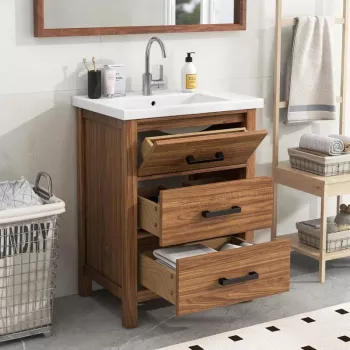
The Freestanding Bathroom Vanity with Sink and 3-Drawer Storage Cabinet is designed for homeowners who want storage that feels intentional rather than improvised. Its furniture-style footprint helps it look at home in both updated and transitional bathrooms.
FAQ
Do freestanding vanities need to be attached to the wall?
Many freestanding vanities can stand on their own, but wall anchoring is commonly recommended for stability and safety. Anchoring helps prevent tipping and keeps the cabinet square over time, which can improve drawer alignment.
Will the drawers interfere with plumbing under the sink?
They can if the drain or supply lines fall in the same space as the drawer boxes. Before buying, confirm your rough-in locations and check the vanity’s internal clearance or cutouts so plumbing and drawers don’t conflict.
What faucet types typically work with a vanity top and sink combo?
It depends on the pre-drilled hole count and spacing. Many tops support single-hole, centerset, or widespread faucets, but it’s important to match your faucet choice to the exact hole configuration.
Recommended for you









Leave a comment