Colorful Silicone Baby Feeding Set with Suction Plates, Spoon & Fork
Mealtimes with babies and toddlers get messy fast—especially during self-feeding. A silicone set with strong suction, easy-grip utensils, and a BPA-free build helps keep food on the plate, supports learning, and simplifies cleanup for everyday breakfasts, snacks, and dinners. The right setup can also make it easier to introduce new textures and foods while keeping the focus on practicing skills instead of chasing a plate across the tray.
What’s Included and Who It’s For
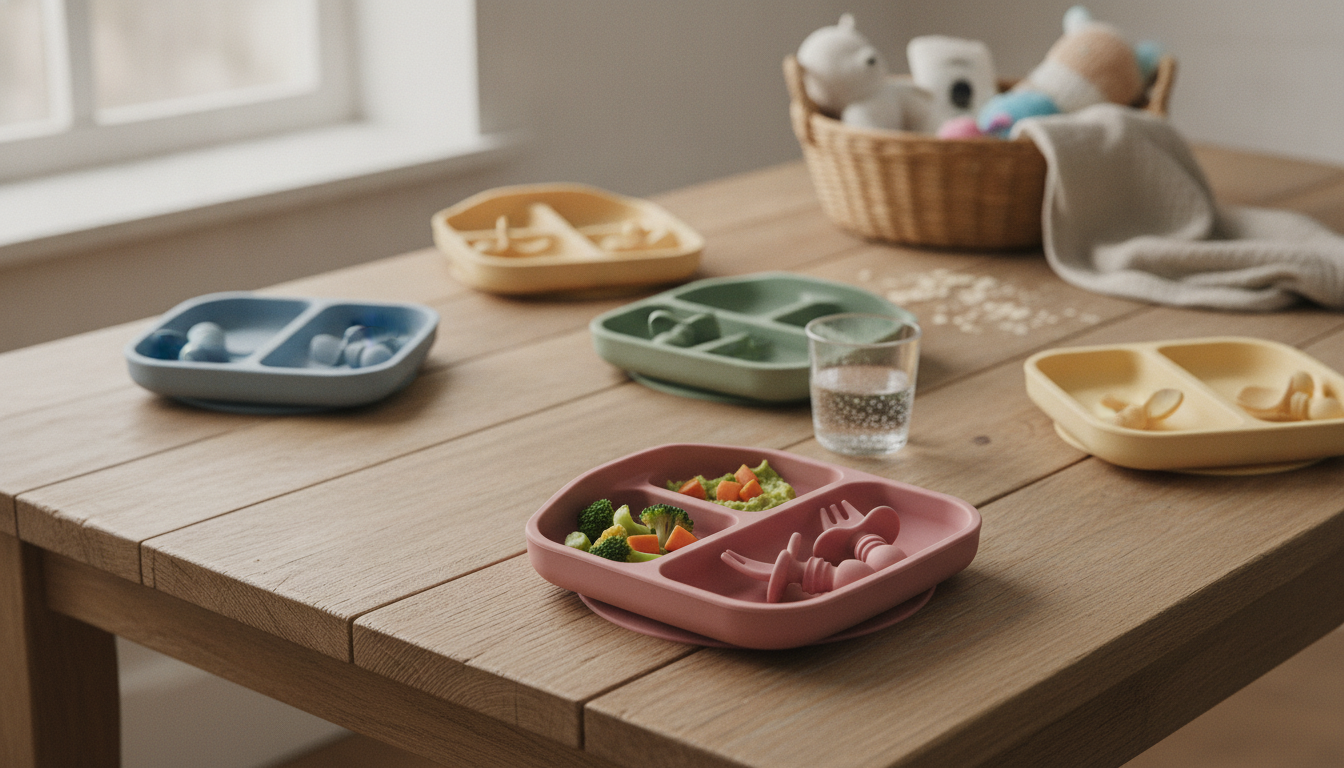
This type of feeding bundle is designed to cover the basics of early meals without overcomplicating your routine. A matching set also looks cohesive on the highchair tray, which can help establish a predictable “meal setup” for little ones.
- Set includes suction plate(s) plus a matching spoon and fork for early self-feeding.
- Designed for babies transitioning to solids and toddlers practicing independent eating.
- Colorful design encourages engagement and makes it easier to spot dropped utensils.
- Soft, flexible silicone is gentler on gums than hard plastic or metal during early bites.
- Works well for puree stages through finger foods (fruit pieces, pasta, soft veggies).
For guidance on when and how to begin solids, the American Academy of Pediatrics offers a helpful overview: Starting Solid Foods (HealthyChildren.org).
Why Silicone and BPA-Free Materials Matter
Feeding tools touch food multiple times a day, so materials and care matter. Silicone is popular for family tableware because it holds up well to frequent washing and everyday drops, while staying softer than rigid plastics.
- Food-contact items benefit from materials that are stable, durable, and easy to wash.
- BPA-free tableware helps reduce exposure to bisphenol A, a chemical of concern in some plastics.
- Silicone is valued for heat resistance and stain resistance compared with many plastics.
- Non-porous surfaces (when properly made and cared for) can be easier to keep fresh between meals.
- Material choice is only part of safety—proper cleaning, inspection, and replacement also matter.
For background on BPA in food-contact applications, see the FDA resource: Bisphenol A (BPA): Use in Food Contact Application.
Suction Plates: Keeping the Plate Where It Belongs
Suction is the feature many caregivers notice immediately—because it addresses the classic plate flip, swipe, and slide. It’s not “magic,” though; it works best when the surface and suction base are set up correctly.
- Suction bases help prevent flipping, sliding, and accidental spills during enthusiastic scooping.
- Best suction performance typically requires smooth, clean, dry surfaces (sealed wood, glass, some plastics).
- Textured tables, silicone placemats, or dusty surfaces can reduce suction strength.
- To remove without tipping, lift the suction tab/edge (if present) or gently peel from one side.
- Portioning food into sections (if the plate is divided) can help toddlers explore new tastes without mixing everything together.
If you’re troubleshooting suction on a highchair tray, try wiping both the tray and the suction base completely dry before pressing down firmly. Small crumbs or moisture can be enough to break the seal.
Spoon and Fork Design for Early Self-Feeding
Utensils for toddlers should feel manageable. Shorter, thicker handles help small hands control movement, while rounded edges keep the experience comfortable as kids learn to scoop and bring food to their mouth.
- Shorter handles are easier for small hands to control and reduce wrist strain.
- Rounded utensil edges can feel more comfortable as toddlers learn to bite and scoop.
- Silicone-friendly grip can help reduce slipping when hands are wet or messy.
- Encourage skill-building by offering thicker foods that “stick” to the spoon at first (yogurt, mashed sweet potato).
- Use the fork for soft, pierceable foods (banana slices, steamed carrots, pasta spirals).
Quick Setup, Cleaning, and Care Tips
For general hygiene reminders (especially helpful when packing leftovers for daycare), the CDC’s core food-safety steps are a solid reference: Food Safety: Clean, Separate, Cook, Chill.
Feature Overview
At-a-Glance Comparison of Practical Features
| Feature |
Why It Helps |
What to Check |
| Suction base |
Reduces spills and plate tossing |
Works best on smooth, clean, dry surfaces |
| Silicone material |
Flexible, durable, easy to rinse |
Look for intact surface; avoid strong odors after washing |
| BPA-free claim |
Supports safer material choices for food contact |
Confirm product labeling and seller details |
| Toddler-sized utensils |
Improves grip and control while learning |
Rounded edges; comfortable handle thickness |
| Bright colors |
Encourages interest and supports routine |
Choose colors that are easy to spot and match your setup |
When This Set Is a Good Fit (and When It Isn’t)
Product Option
Colorful Silicone Baby Feeding Set with Suction Plates, Spoon & Fork – BPA Free Toddler Tableware is an everyday set designed to support self-feeding and reduce mess with a stable suction base and toddler-friendly utensils.
More In-Stock Picks
FAQ
Do suction plates stick to all highchair trays and tables?
No. Suction works best on smooth, non-porous, clean, dry surfaces; textured plastic, wood grain, or dusty surfaces can reduce grip. Wipe the tray and suction base dry and press firmly, or switch to a smoother surface if it keeps releasing.
Is silicone tableware safe for babies and toddlers?
Food-grade silicone is commonly used for baby and toddler tableware, and BPA-free labeling can help when choosing food-contact items. For safety, follow care instructions, wash thoroughly, and stop using items that show tears, warping, or damage.
How do you get rid of odors or stains in silicone feeding sets?
Rinse promptly after meals, then wash with warm soapy water and dry completely. For lingering odors, an occasional soak in a baking-soda-and-water solution can help; if smells persist after repeated cleaning, it may be time to replace the item.
Recommended for you










Leave a comment