
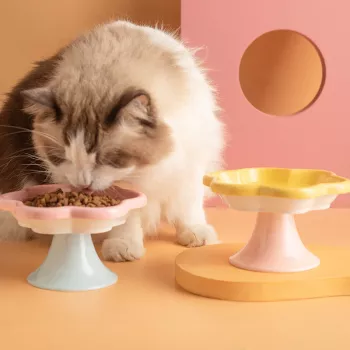
A good bowl can make mealtimes calmer and cleaner. Ceramic options are valued for their weight, smooth glaze, and easy-to-wash surface—helpful for tidy feeding areas and cats that prefer a stable bowl that doesn’t slide. The right shape and size can also support comfortable eating and reduce mess around the dish.
Ceramic has a “set it down and it stays put” feel that many cats (and floors) appreciate. When your cat eats with confidence—without a dish skittering away—there’s often less mess, less noise, and fewer mid-meal surprises.
Comfort isn’t just about what’s in the bowl—it’s about how your cat reaches it. Small design choices can make eating feel easier, especially for cats that are picky, sensitive, or quick to walk away if something feels “off.”
Each bowl material has strengths. The best choice depends on your cat’s habits (tipper vs. grazer), your cleaning routine, and how you want the feeding area to look and function.
| Material | Pros | Watch-outs | Best for |
|---|---|---|---|
| Ceramic (glazed) | Stable, easy to wash, odor-resistant when intact | Chips/cracks if dropped; avoid damaged glaze | Cats that tip bowls; tidy feeding stations |
| Stainless steel | Very durable, non-porous, lightweight | May slide; can be noisy; water spots | Long-term durability; travel (with mat) |
| Plastic | Affordable, lightweight, many shapes | Scratches hold residue; may retain odors | Short-term use; backup bowls (replace often) |
If your cat deals with chin irritation or seems bothered by lingering smells, many owners lean toward smoother, scratch-resistant materials with frequent washing. Regardless of bowl type, a non-slip mat helps keep dishes in place and protects floors.
Not all ceramic is equal. A well-made bowl should feel smooth, sturdy, and consistently finished—especially where food and water sit.
For general pet care guidance and everyday best practices, the American Veterinary Medical Association (AVMA) offers a helpful range of pet owner resources.
Even the best bowl works better with a simple routine. Regular washing reduces residue, keeps odors down, and helps your cat stay interested in food and water.
For additional food handling and safety basics, the FDA’s pet food safety guidance is a reliable reference.
If the goal is a sturdy, everyday feeding bowl that looks clean and stays put, the Ceramic Cat Bowl is an easy place to start. It works well as a main food bowl or as a dedicated water bowl, depending on your cat’s routine, and it pairs nicely with a silicone mat for extra grip and quicker cleanup around the feeding area.
For a more organized home setup around your pet’s supplies (extra bowls, mats, and cleaning essentials), a storage-friendly furniture option like the Queen Velvet Upholstered LED Bed Frame with 4 Drawers & Heart Shaped Headboard can help keep everyday items tucked away while maintaining a neat living space.
Intact, smooth, glazed ceramic is commonly used for food-safe dishes. Avoid bowls with chips or cracks, and wash regularly to keep the surface clean and hygienic.
Food bowls should be washed frequently—ideally after each meal, especially with wet food. Water bowls should also be cleaned regularly to prevent film buildup and keep water fresh.
Some cats dislike deep bowls because their whiskers repeatedly touch the sides, which can feel uncomfortable. A wider, shallower bowl with a stable base often improves comfort and reduces tipping.





Leave a comment