
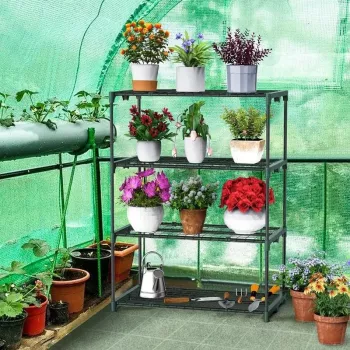
Extra-wide shelving can quickly turn a crowded greenhouse corner, patio wall, or bright indoor spot into an organized growing zone. This 2-pack set of metal, 4-tier plant racks is designed to keep pots off the floor, improve airflow around foliage, and make daily watering and plant checks easier—while staying portable enough to move as seasons change.
When plants start multiplying, horizontal space disappears fast. Multi-tier racks add height-based storage without the commitment (or cost) of permanent benches.
For indoor setups, placement and light intensity matter just as much as the rack itself. The University of Minnesota Extension has practical guidance on indoor light and positioning considerations: Growing plants indoors (light and placement considerations).
This set includes two separate shelving units. Each unit has four tiers, giving you eight total levels for plant storage across the pair. That flexibility is the real advantage: instead of forcing one long footprint, you can create two distinct “stations” that match your space and microclimates.
| Placement | Best for | Practical tip |
|---|---|---|
| Against a greenhouse wall | Maximizing floor space for additional pots or a small potting area | Leave a small gap behind the rack for airflow and easier cleaning |
| Near a door or vent | Hardening off seedlings and reducing heat stress | Rotate plants so one side doesn’t get stronger airflow |
| Under grow lights indoors | Seed-starting and propagation | Use trays to catch drips and keep tiers easy to wipe down |
| On a covered patio | Seasonal herbs and flowering containers | Group plants by watering needs to speed up daily care |
Whether you’re building a seed-starting shelf indoors or reorganizing a greenhouse for summer, stability and easy access make the biggest day-to-day difference.
In greenhouses especially, airflow and ventilation reduce heat stress and moisture-related issues. For clear, practical greenhouse care basics, see the Royal Horticultural Society’s guidance: Greenhouse and conservatory growing (ventilation and care basics).
A four-tier rack works best when each level has a “job.” That might be based on weight, watering frequency, or light demand—often it’s a mix of all three.
For a simple routine, place your most frequently checked plants (new cuttings, recent transplants, anything recovering from pests) at eye level on the middle tiers. That keeps problems visible before they spread.
Yes—extra-wide, multi-tier racks work well under grow lights as long as you use waterproof trays or saucers to catch drips and protect floors. Position tiers so light-sensitive plants aren’t too close to bulbs, and keep cords and power strips away from water.
Place the racks along the side walls and keep a center aisle open for watering and access. Leave a small gap behind each rack for circulation, avoid crowding plants so leaves aren’t pressed together, and keep vents and doors unobstructed.
Do quick wipe-downs to remove soil spills, algae film, and mineral residue, and prevent standing water by using trays you can empty regularly. Let surfaces dry when possible and periodically inspect joints and fasteners, especially after moving the racks.






Leave a comment