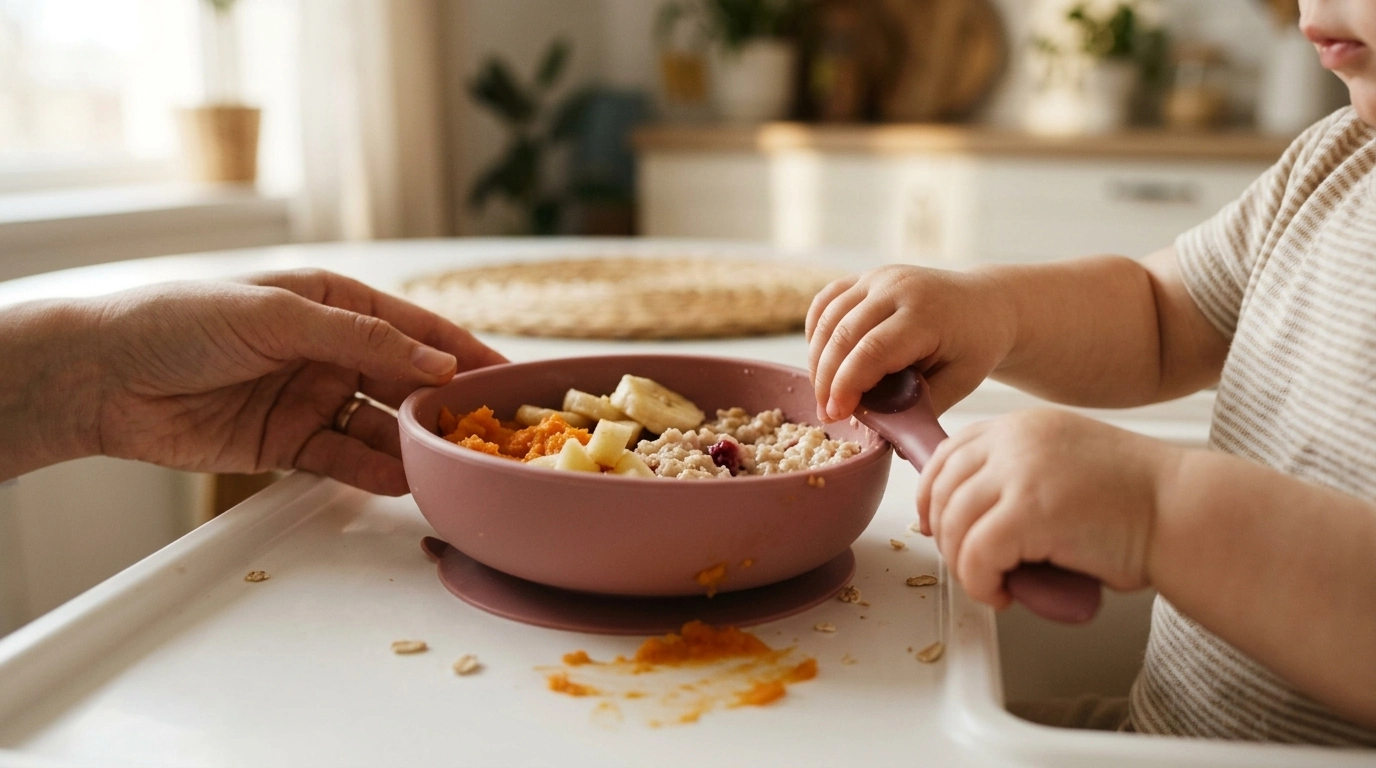
Mealtime with babies and toddlers often means tipped bowls, slippery utensils, and constant cleanup. A silicone suction bowl dinner set is designed to stay put, feel gentle on gums, and support self-feeding while keeping portions and textures easy to manage as little ones learn new skills. When the bowl is harder to push and flip, kids get more practice scooping, pinching, and exploring new foods—while caregivers spend less time rescuing dinner from the floor.
What’s Included and What Each Piece Does
Most silicone suction bowl dinner sets focus on a few simple components that make everyday feeding smoother—especially during the messy learning phase.
- Suction bowl base: Helps reduce tipping and sliding on smooth, non-porous surfaces like many high-chair trays, sealed countertops, and glossy tables.
- Soft silicone material: Comfortable for early eaters and less noisy (and less likely to scratch surfaces) than rigid plastic on high chairs and tables.
- Kid-friendly edges and depth: A higher bowl wall can make it easier to scoop with a spoon and reduce spill-over when a child’s wrist control is still developing.
- Set-based routine: Using the same pieces daily can create a predictable “this is my eating gear” habit, which often helps with transitions from puree to thicker textures and finger foods.
Quick Specs to Check Before Buying
A suction bowl is only as useful as its materials, shape, and how it fits into your day-to-day cleaning routine. Before choosing a set, confirm these basics.
At-a-Glance Checklist
| Feature |
Why it matters |
What to confirm |
| Suction strength |
Prevents flipping and pushing |
Works on smooth, clean surfaces; releases with a lift-tab if included |
| Material quality |
Comfort and safety for daily use |
BPA-free silicone; food-contact safe labeling |
| Bowl shape |
Easier scooping and portioning |
High sides; stable base; size appropriate for age/stage |
| Cleaning |
Hygiene and convenience |
Dishwasher-safe or easy to hand wash; stain/odor resistance notes |
| Heat use |
Feeding flexibility |
Microwave/freezer suitability if needed; avoid overheating per instructions |
Also keep in mind that “strong suction” isn’t universal—performance depends heavily on your high-chair tray material and how clean/dry the contact area is.
How to Get the Best Suction (And Fewer Floor Meals)
If a suction bowl seems unreliable, the issue is often the setup—not the product. These small habits can make the seal noticeably stronger.
- Clean both surfaces: Wipe the high-chair tray/table and the suction base to remove oils and crumbs that weaken suction.
- Press from the center: Apply firm downward pressure to set the seal before adding food (especially liquids or slippery purees).
- Use on the right surface: Suction performs poorly on textured wood grain, silicone mats, and heavily curved trays.
- Teach the “release” method: Lifting from an edge breaks suction; if there’s a tab, show caregivers how to peel up safely instead of yanking.
- Start with thicker foods: Yogurt, oatmeal, mashed veggies, and soft, small pieces are often easier to manage while a child learns to scoop and bring food to the mouth.
For safety, continue to supervise closely and follow reputable guidance on age-appropriate textures and choking hazards from sources like the CDC and the American Academy of Pediatrics.
Cleaning, Stains, and Odor: Practical Care Tips
Silicone is designed for repeat use, but it can hold onto odors or take on color from strongly pigmented foods. A consistent routine keeps it fresh.
- Daily wash: Warm soapy water and a thorough rinse helps prevent lingering odors—especially after dairy, garlic, or fish.
- Dishwasher use: Place securely so the silicone doesn’t flip and pool dirty water; let it dry fully before stacking in cabinets.
- Dealing with stains: Tomato sauce, curry, and berries can tint silicone—prompt rinsing and washing soon after meals can reduce staining.
- Deep clean when needed: A baking soda paste or a quick dilute vinegar rinse can help with odor; rinse very well afterward and air-dry completely.
- Inspect regularly: Replace items if silicone becomes torn, sticky, or noticeably degraded (any damage can make cleaning less effective).
Safety Notes for Everyday Feeding
A suction bowl is a convenience tool—not a safety device. Use it as part of an overall mealtime setup that prioritizes supervision and appropriate food prep.
If product labeling mentions BPA-free materials, it can be helpful to understand broader food-contact context from the FDA.
A Budget-Friendly Pick for Daily Use
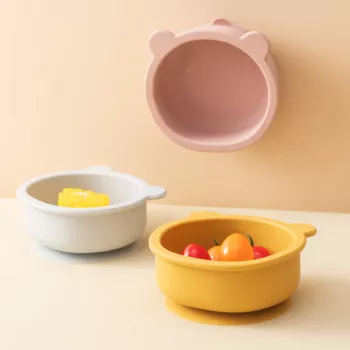
For families who want a straightforward option that supports self-feeding without adding extra fuss to cleanup, the Silicone Baby Suction Bowl Dinner Set is a simple choice for snacks, early meals, and daily practice with spoons and finger foods. Silicone’s flexibility is also helpful for travel—lightweight to pack and less likely to crack than rigid bowls.
Two helpful add-ons to consider
FAQ
Why won’t the suction bowl stick to the high-chair tray?
Suction works best on clean, flat, non-porous surfaces, so textured or curved trays can prevent a full seal. Wipe both the tray and the suction base to remove oils or crumbs, dry the area, then press firmly from the center to set the suction.
Is silicone dinnerware safe for babies?
Silicone dinnerware is commonly used for babies when it’s clearly labeled as food-contact safe and made with BPA-free, phthalate-free materials. Follow the manufacturer’s care instructions and replace any item that becomes torn, sticky, or damaged.
How do stains and smells come out of silicone bowls?
Rinse promptly after strongly pigmented foods, then wash with warm soapy water and rinse well. For lingering odor, use an occasional baking soda paste or a dilute vinegar rinse, and allow the bowl to fully air-dry before storing.
Recommended for you









Leave a comment